OpenAI’s Jalapeño chip and Apple’s new Macs push AI deeper into silicon

Today’s technology news is about AI moving down the stack. OpenAI published early results for its custom inference chip, Apple refreshed Macs for local AI, Intel laid out heterogeneous agentic-AI architectures, Google launched a governed legal AI platform, and security teams faced fresh pressure from exploited Windows flaws.

OpenAI’s Jalapeño targets inference cost and latency
At Hot Chips, OpenAI shared early benchmark results for Jalapeño, its Broadcom-developed custom inference ASIC. OpenAI says the chip delivered 1.5x to 1.9x more AI work per watt and 1.7x to 3.6x lower end-to-end latency than comparison systems across large-model tests. TechCrunch notes the system is aimed at inference rather than training and is expected to deploy only in very small volumes near the end of 2026, with broader impact more likely in 2027. The strategic point is clear: frontier AI labs want to tune models, memory, networking, and chips together instead of relying only on general-purpose GPUs.
Read the full story
Apple refreshes Mac mini and Mac Studio for local AI
Apple introduced an M6 Mac mini and new Mac Studio systems with M5 Max and M5 Ultra. The M6 Mac mini starts at $899, includes 16GB of unified memory and 256GB of storage, and ships after September 22 with macOS 27 and Siri AI. Apple says its AI performance is four times higher than the M4 model, while the M5 Ultra reaches up to 36 CPU cores, 80 GPU cores, and 1.2 TB/s unified-memory bandwidth. The Mac line is becoming a local-AI platform for developers who want lower latency, tighter data control, and less dependence on cloud GPUs.
Read the full story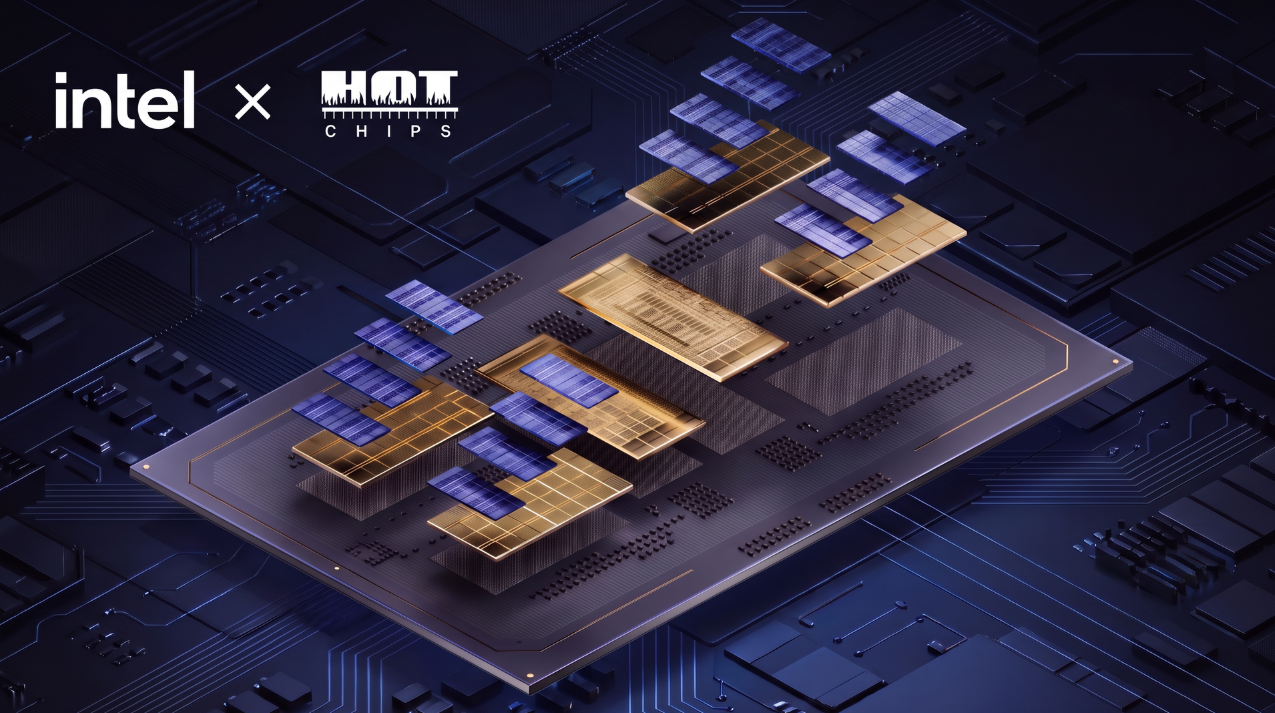
Intel argues agentic AI needs heterogeneous systems
Intel used Hot Chips 2026 to present Diamond Rapids, Crescent Island, and Wildcat Lake as a rack-to-edge architecture for agentic AI. Diamond Rapids is a next-generation Xeon design with up to 256 cores, 1.28GB of last-level cache, 16 memory channels, and PCIe Gen6/CXL 3.0. Crescent Island is a 350-watt air-cooled PCIe GPU for inference with up to 480GB of LPDDR5X memory, while Wildcat Lake brings hybrid AI to mainstream laptops and edge systems. Intel’s message is that agentic workloads need CPUs, inference accelerators, chiplets, packaging, and memory systems coordinated around power and cost constraints.
Read the full story
Google packages Gemini for governed legal work
Google Cloud introduced Gemini Enterprise for Legal in preview, positioning it as a domain-specific agent platform rather than a general chatbot. The product combines legal skills, secure connectors to systems such as iManage, NetDocuments, Microsoft 365, Docusign, Everlaw, and RelativityOne, prebuilt agents, and a governed control plane. Google says customer data, playbooks, intellectual property, custom agents, and model outputs remain private and are not used to train or fine-tune its foundation models. The launch shows enterprise AI shifting toward regulated workflows where permissions, citations, auditability, and confidentiality matter as much as model quality.
Read the full story
Exploited Windows flaw keeps identity and endpoint security in focus
CISA and Microsoft confirmed exploitation of CVE-2026-68820, a Windows Winsock privilege-escalation flaw used in a North Korean campaign targeting defense and aerospace job applicants. Federal agencies were ordered to patch by August 25, and The Record reported that affected systems require a restart and have no workaround. Check Point linked the bug to Operation Dream Job, where attackers impersonated recruiters and delivered malicious PDF files. The lesson for technology teams is broader than one patch: attackers are combining trusted brands, social engineering, endpoint exploits, and valid access paths, so patching must be paired with phishing-resistant identity controls and telemetry review.
Read the full story T
TPulled the most relevant stories from the last 24h — headlines, key points and original sources are all in.
 J
JGot it. Wrote it up in four languages across six sections, leading with why this matters right now.
 W
WFact-checked. Asked Jasper to tighten two figures and drop the AI-speak; the rest holds — ship it.
Explore the world's news with MokiNewsExplore the world's news with MokiNewsExplore the world's news with MokiNewsExplore the world's news with MokiNewsExplore the world's news with MokiNewsExplore the world's news with MokiNewsExplore the world's news with MokiNewsExplore the world's news with MokiNewsExplore the world's news with MokiNewsExplore the world's news with MokiNewsExplore the world's news with MokiNewsExplore the world's news with MokiNewsExplore the world's news with MokiNewsExplore the world's news with MokiNewsExplore the world's news with MokiNewsExplore the world's news with MokiNewsExplore the world's news with MokiNewsExplore the world's news with MokiNewsExplore the world's news with MokiNewsExplore the world's news with MokiNewsExplore the world's news with MokiNewsExplore the world's news with MokiNewsExplore the world's news with MokiNewsExplore the world's news with MokiNewsExplore the world's news with MokiNewsExplore the world's news with MokiNewsExplore the world's news with MokiNewsExplore the world's news with MokiNewsExplore the world's news with MokiNewsExplore the world's news with MokiNews