Stronger El Niño signal, autoimmune CAR T trial and Roman telescope countdown lead science news

This week’s science news connects climate risk, translational medicine, materials physics and space astronomy: a coral record points to stronger eastern Pacific El Niños, early CAR T data suggest a possible immune reset for refractory rheumatoid arthritis, and NASA is preparing Roman for a wide-field survey era.
Corals point to stronger eastern Pacific El Niños
A Science study reported by AP uses Galápagos coral records to extend ENSO evidence back roughly 900 to 1,000 years. The team found El Niño variability more than 36% stronger than before the mid-19th-century industrial era, including a 16% rise over the past 40 years. Lead author Julia Cole links the pattern to human-caused warming, but outside scientists noted remaining debate over how directly coral proxies map onto recent Galápagos temperature observations. The practical concern is clear: stronger El Niños can amplify drought, floods, heat, coral bleaching and food-security risks.
Read the full story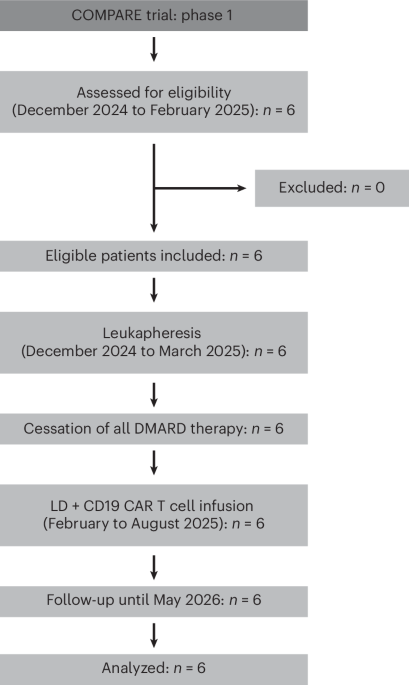
CD19 CAR T cells move deeper into autoimmune disease
Nature Medicine published the phase 1 part of the COMPARE trial, testing mivocabtagene autoleucel, an autologous fully human CD19 CAR T-cell therapy, in six adults with severe treatment-refractory ACPA-positive rheumatoid arthritis. All patients had grade 1–2 cytokine-release syndrome, with no ICANS or serious adverse events; one grade 3 transaminase elevation resolved. Disease activity improved in all patients, median DAS28-CRP fell 34% at latest follow-up, and three of six reached DAS28-CRP remission plus ACR70 response. The study is small and uncontrolled, but it supports phase 2 testing of CAR T therapy as a possible immune-reset strategy beyond cancer.
Read the full story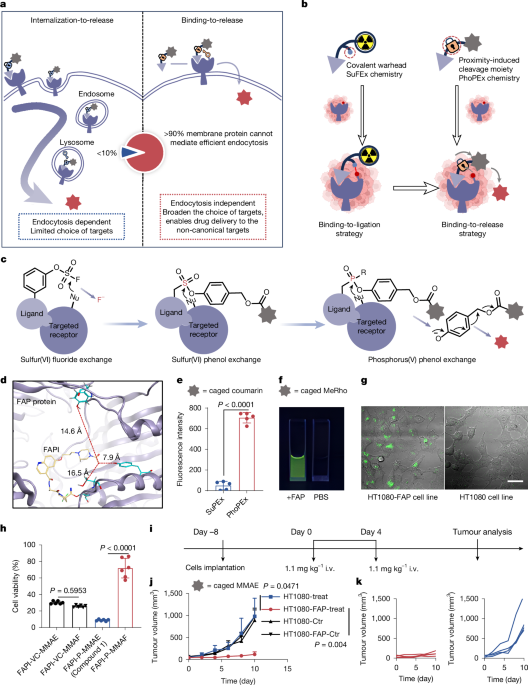
Binding-to-release chemistry expands cancer drug-conjugate targets
Another Nature paper tackled a bottleneck in antibody and small-molecule drug conjugates: many tumour targets bind well but do not internalize efficiently, while conventional conjugates usually need endocytosis to release payloads. The team introduced a binding-to-release strategy using PhoPEx chemistry, in which target binding positions the linker near a reactive residue and releases a membrane-permeable drug outside the cell. For FAP-targeted conjugates, tumour MMAE exposure was 5.9 times higher than with an internalization-dependent comparator, with much higher tumour-to-blood and tumour-to-liver ratios; the approach was also extended to PD-L1. The result remains preclinical, but it could broaden the usable target space for diagnostics and cancer therapy.
Read the full story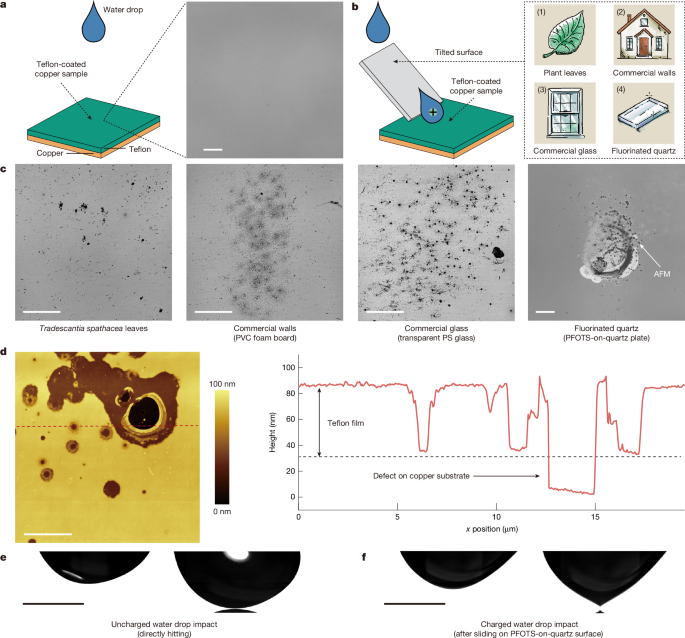
Charged raindrops reveal a hidden corrosion pathway
A Nature study showed that water drops sliding over common surfaces such as leaves, PVC, polystyrene glass and hydrophobic PFOTS coatings can acquire tiny electrical charges. In laboratory tests, drops carrying about 0.2 to 2 nanocoulombs struck Teflon-coated copper; after 3,000 charged drops, the coating broke down and the underlying metal corroded, while neutral drops caused no comparable damage. The mechanism is dielectric breakdown as the charged drop approaches the coated metal. Because rain, dew, melting snow and sea spray commonly move over insulating surfaces, corrosion prevention for cars, ships, buildings and cultural heritage may need to account for charge-induced coating failure, not only acidity or abrasion.
Read the full story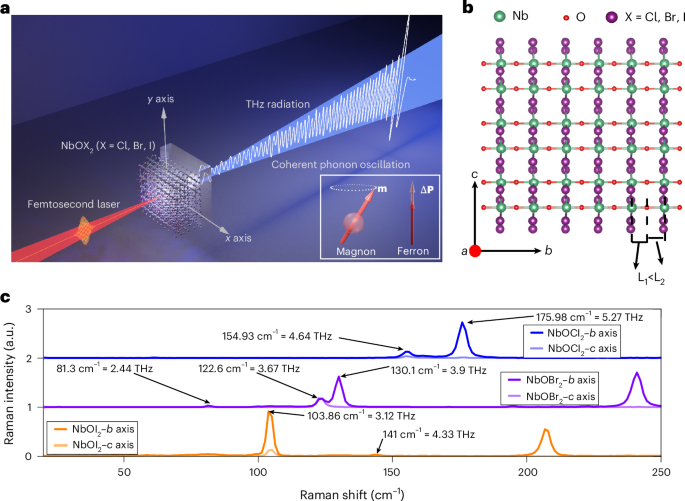
Electrically controlled ferrons point to compact terahertz emitters
Nature Physics reported real-time generation, detection and non-volatile electric-field control of coherent ferron oscillations in layered ferroelectric NbOX2 materials, where X can be iodine, bromine or chlorine. Ferrons are collective excitations of electric polarization, the electric analogue of magnons. By coupling soft phonons and ferroelectric order, the experiments produced narrowband terahertz radiation with emission efficiency up to five orders of magnitude higher per unit thickness than state-of-the-art semiconductor terahertz emitters. Direct electrical switching that persists after the field is removed makes the result relevant to ultrafast photonics, on-chip terahertz technology and future wireless systems, though it is still materials physics rather than a deployable device.
Read the full story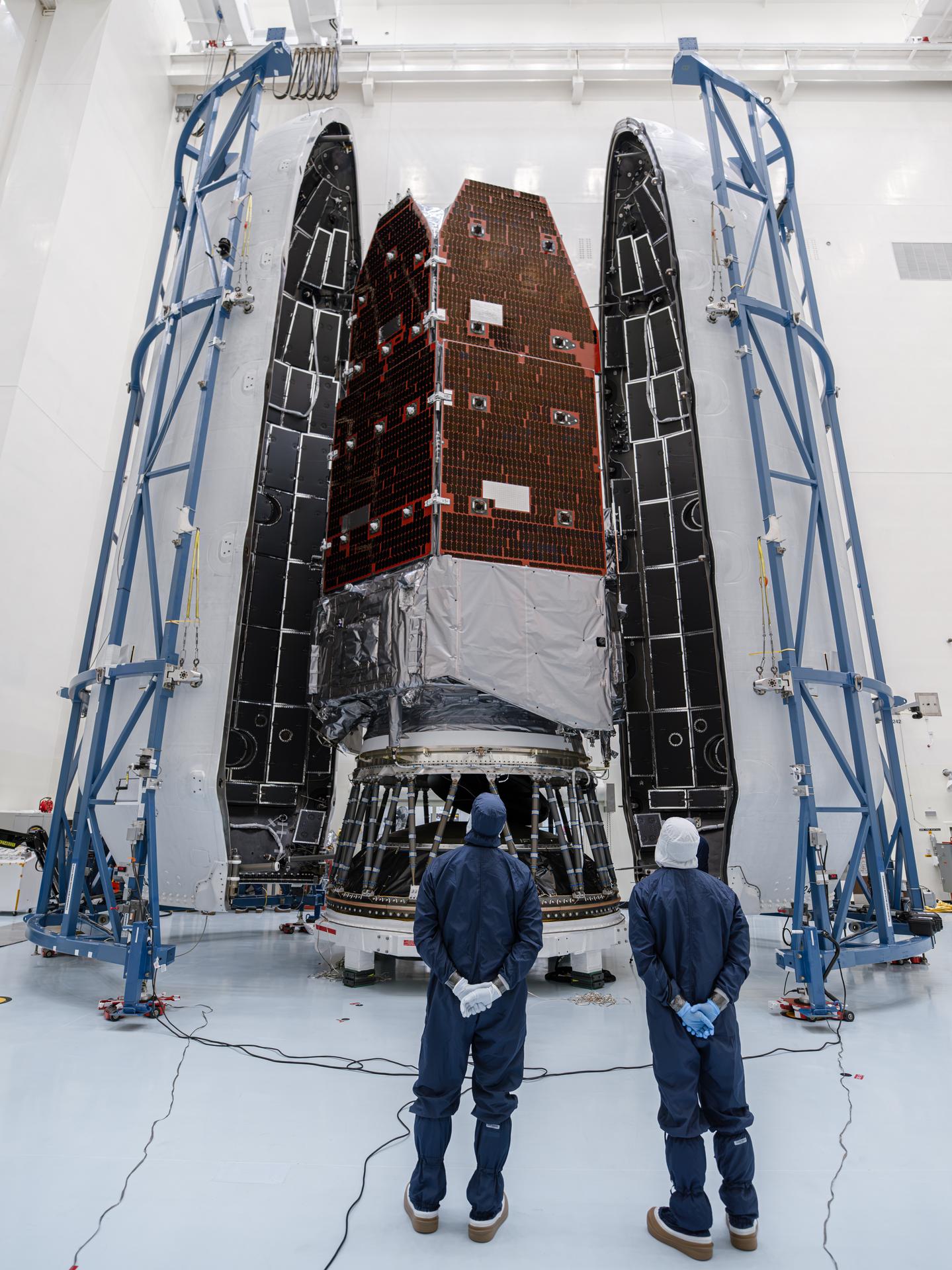
Roman telescope enters final launch countdown
NASA is targeting the Nancy Grace Roman Space Telescope for launch no earlier than 7:26 a.m. EDT on August 30 aboard a SpaceX Falcon Heavy from Kennedy Space Center’s Launch Complex 39A. Roman combines sharp infrared imaging with a field of view at least 100 times larger than Hubble’s, then heads to the Sun-Earth L2 point about one million miles from Earth. The five-year primary mission, with a goal of ten years, will survey dark energy, dark matter, exoplanets, black holes and billions of galaxies, with processed science data released publicly. Roman’s significance is scale: it is designed less to stare at one target deeply than to map the universe statistically.
Read the full story T
TPulled the most relevant stories from the last 24h — headlines, key points and original sources are all in.
 J
JGot it. Wrote it up in four languages across six sections, leading with why this matters right now.
 W
WFact-checked. Asked Jasper to tighten two figures and drop the AI-speak; the rest holds — ship it.
Explore the world's news with MokiNewsExplore the world's news with MokiNewsExplore the world's news with MokiNewsExplore the world's news with MokiNewsExplore the world's news with MokiNewsExplore the world's news with MokiNewsExplore the world's news with MokiNewsExplore the world's news with MokiNewsExplore the world's news with MokiNewsExplore the world's news with MokiNewsExplore the world's news with MokiNewsExplore the world's news with MokiNewsExplore the world's news with MokiNewsExplore the world's news with MokiNewsExplore the world's news with MokiNewsExplore the world's news with MokiNewsExplore the world's news with MokiNewsExplore the world's news with MokiNewsExplore the world's news with MokiNewsExplore the world's news with MokiNewsExplore the world's news with MokiNewsExplore the world's news with MokiNewsExplore the world's news with MokiNewsExplore the world's news with MokiNewsExplore the world's news with MokiNewsExplore the world's news with MokiNewsExplore the world's news with MokiNewsExplore the world's news with MokiNewsExplore the world's news with MokiNewsExplore the world's news with MokiNews